
Daftar Isi:
What Are We Really Automating? Business Process Automation 2026
Business Process Automation 2026 – At its core, automation is about creating a system where technology handles predictable, rule-based tasks without human intervention. When you add a layer of artificial intelligence, it gets even smarter. This intelligent process automation can understand context, make simple decisions, and even learn from new data.
So, instead of just moving a file from one folder to another, an AI-powered system can read an invoice, extract the relevant data, check it against a purchase order, and route it for payment. All of this happens in seconds. It’s fast, accurate, and works 24/7.

Baca Juga:
The Tangible Benefits for Your Business
Implementing automation isn’t just a tech upgrade; it’s a strategic business move. The impact can be quite significant, and it usually shows up in a few key areas.
Boosting Team Productivity
When you automate repetitive tasks, you give your team their time back. Suddenly, they have more hours in the day to focus on customer-facing activities, strategic planning, or product development. This not only improves output but also boosts morale. Nobody enjoys endless copy-and-paste tasks.
Slashing Operational Costs
Fewer manual hours directly translate to lower operational costs. Automation also drastically reduces the chances of human error, which can be surprisingly expensive to fix. Think about the cost of a typo on a major invoice or a data entry mistake in a customer’s record. Automation pretty much eliminates that risk.
Baca Juga:
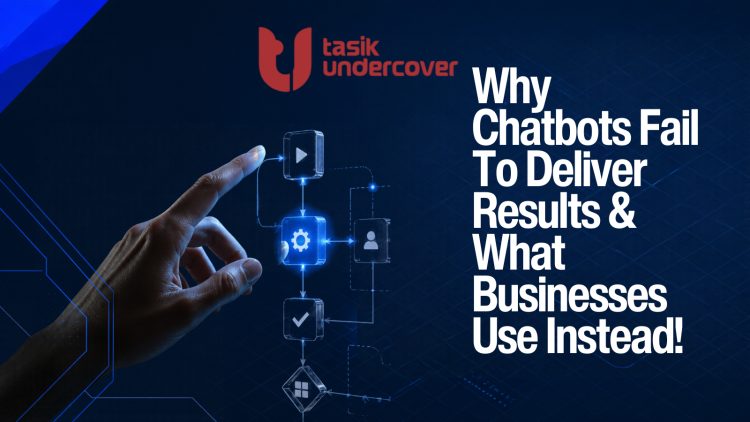
Real-World Business Process Automation Examples
Theory is great, but seeing it in action makes all the difference. Here are a couple of common examples I’ve seen deliver huge value.
Customer Service and Support
Instead of manually responding to every single query, AI-powered chatbots can handle common questions instantly. They can answer things like “Where is my order?” or “What are your business hours?”, freeing up human agents to handle the more complex, sensitive customer issues that require a human touch.
Finance and Accounting
This department is often buried in manual processes. Automating invoice processing is a classic example. An AI system can receive an invoice via email, extract key information like the vendor, amount, and due date, and enter it directly into your accounting software. No manual data entry needed.
Baca Juga:
A Note on AI Consulting Solutions
Getting started can feel overwhelming. This is often where AI consulting solutions come into play. A good consultant or an agency offering AI automation services can help you identify the best processes to automate first for the biggest impact, ensuring you get a solid return on your investment.
FAQ
- Is business process automation expensive to implement?
It can be, but it doesn’t have to be. You can start small with a single, high-impact process. The cost savings from that one automation can often fund the next one. - Will automation replace my employees?
In my experience, it’s more of a role shift. It frees employees from repetitive work to focus on more valuable, strategic tasks that require human intelligence and creativity. - What’s the difference between standard automation and intelligent process automation?
Standard automation follows very strict, pre-defined rules. Intelligent automation uses AI to handle more complex scenarios, understand unstructured data (like text in an email), and even make simple judgments. - How do I know which processes to automate?
Look for tasks that are high-volume, repetitive, and rule-based. Invoice processing, data entry, and report generation are classic starting points. - Do I need a technical team to manage this?
Not necessarily. Many modern automation platforms are low-code or no-code, designed for business users to manage. For more complex setups, partnering with an expert in AI automation services is a good idea. - How long does it take to see a return on investment (ROI)?
This varies, but for well-chosen projects, you can often see a positive ROI within a few months through saved time and reduced errors. - Can automation help with compliance?
Absolutely. Automated processes ensure that steps are never missed and that a digital audit trail is created for every action, which is a huge help for compliance and reporting.
Conclusion
Stepping into business process automation isn’t about chasing the latest tech trend. It’s a practical decision to make your business more efficient, resilient, and competitive. The key is to start smart. You don’t need to automate your entire company overnight.
Pick one or two processes that are causing the most friction and start there. See the results for yourself. By freeing up your team from robotic tasks, you empower them to do the kind of innovative, meaningful work that truly drives your business forward.